
AI summit proves the future is bright for health sector
Published: 21 January 2019
Artificial Intelligence (AI) is a field of computer science which develops automated systems that sense their environments, learn from experience, solve problems and achieve goals. AI has been around for decades, but the last five years have seen ground-breaking developments, with giants like Google, Baidu and Amazon pouring billions of dollars into research.
AI is now a commodity and you will already find it in commercially-funded technologies such as Apple’s Siri and Google’s Assistant. You can rent a powerful AI capability from Amazon or Google which was impossible as recently as five years ago. It is going to be hugely disruptive across most industries – so how will it impact healthcare?
Ian Vaile, Healthdirect Australia’s Innovation Manager, who attended the AI Summit Singapore, explains what the health sector might look like in the future.
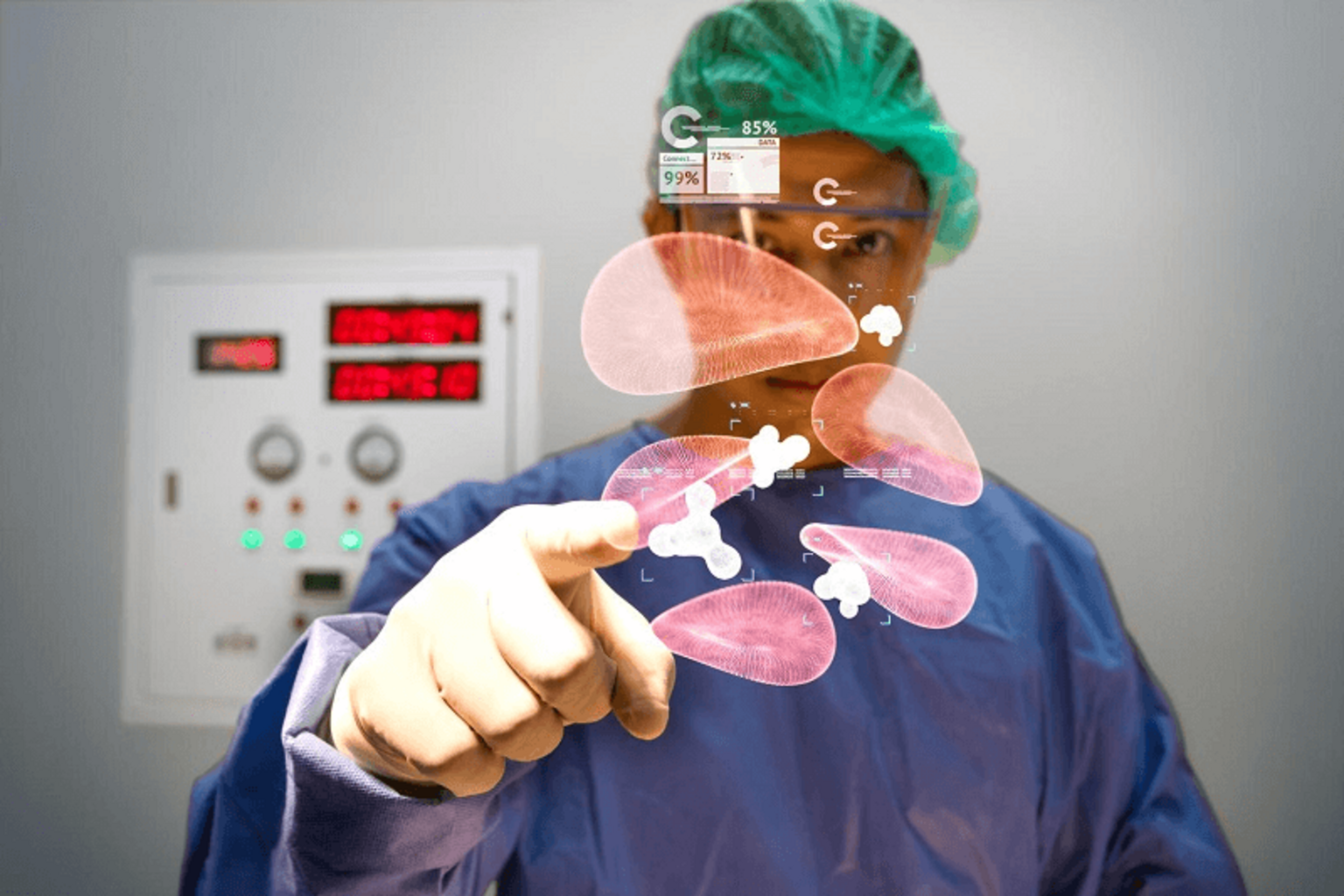
AI thrives on data, and few sectors generate as much data as healthcare.
Data crunching
AI thrives on data, and few sectors generate as much data as healthcare and its allied industries. Machine learning systems analyse very large and complex data sets to perform tasks.
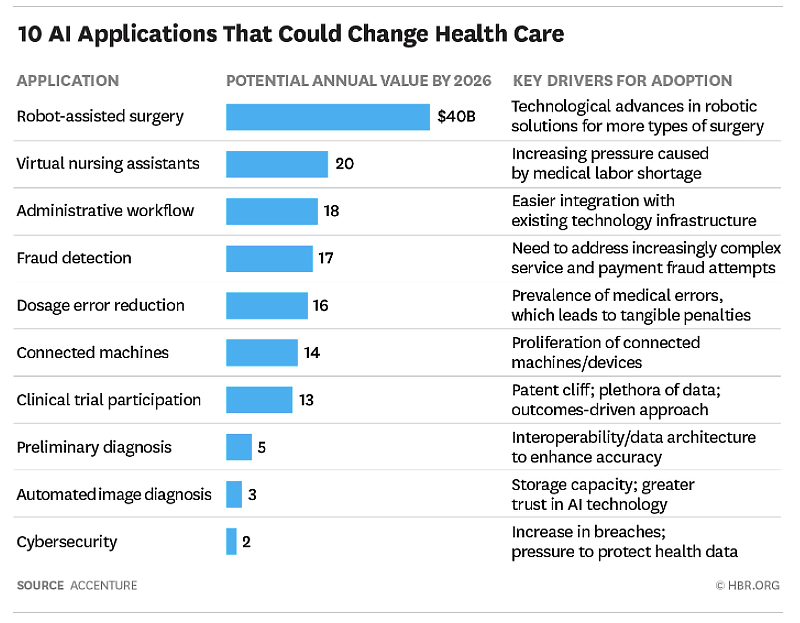
AI will automate most administrative tasks. Any complex but repetitive task, such as resource allocation, claims, payments, information entry or scheduling, can be done by machines. There’s a whole industry called Robotic Process Automation which takes these sorts of jobs and learns how to best automate and optimise them.
At individual and population scales, gathering data dramatically enhances our ability to analyse information and draw micro and macro conclusions. With detection, monitoring and lifestyle management, AI will profoundly change chronic disease management by tracking and predicting consumer behaviours and conditions to provide highly individualised care. Our ability to follow and analyse multiple dimensions of an individual’s health profile is about to grow exponentially.
Diagnosis, forecasting and disease management processes are also prime candidates for AI intervention. The most-cited clinical example is radiology because AI excels at pattern recognition. An AI system can examine thousands of scans quickly and detect changing anomalies over time. Pharmacology and pathology are also likely early adopters.
The pitfalls
There are important caveats about AI, of course. In a healthcare setting we must always be able to understand the logical basis for an AI system’s actions or conclusions, avoiding inexplicable outcomes. AI is only as good as the data it trains on and the assumptions inherent in its programming, and there are some notorious examples of that bias already. If there is bias built into the training data – for example through selecting an unrepresentative section of the population – then that bias flows on to anything that an AI is used for.
How things will change
AI will bring wholesale job changes as tasks previously too complex or variable to automate become accessible to learning machines. While it will change the employment ecosystem in healthcare, AI is not about to replace humans. It does not mean we will no longer need radiologists. Professor Curtis Langlotz, Stanford University, famously said:
Artificial Intelligence will not replace radiologists. Those radiologists who use AI will replace the ones who don’t.
What the future holds
The best results come from skilled people working with AI systems to make better decisions and perform complex tasks more effectively. Healthcare will always require human skills, such as empathy, judgement and the ability to see a holistic picture for consumers.
Artificial intelligence may be a transformational technology – the fourth industrial revolution – but it’s still a tool and it’s up to us to determine how we build it and how we use it. This is powerfully true in healthcare, so it is important to understand the implications and make sure these new systems deliver beneficial and ethical outcomes for our whole society.
Last reviewed: January 2019