
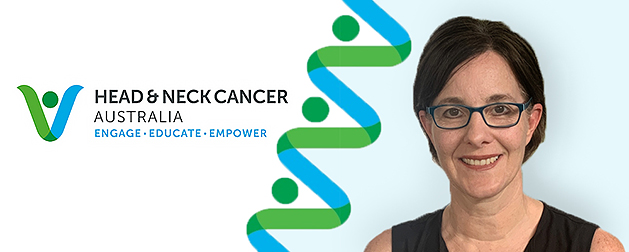
Partner in focus: Nadia Rosin CEO Head and Neck Cancer Australia
Published: 22 February 2023
What is the vision of Head and Neck Cancer Australia?
The vision of Head and Neck Cancer Australia (HANCA) is to save lives and ensure no Australian faces head and neck cancer alone. We are the only national charity dedicated to providing information, education, support and advocacy for people living with head and neck cancer, their families and carers. We represent over 5,100 people who are newly diagnosed each year and more than 17,000 people who are living with head and neck cancer and the family, friends and carers involved in their care.
We also lead the national effort to raise awareness of head and neck cancer among all Australians and healthcare professionals to increase early diagnosis and encourage prevention.
Since 2014, we have worked closely with over 80 leading head and neck cancer clinicians as well as patients and carers across Australia to develop the world’s most comprehensive library of resources including fact sheets, videos, 3D animations, podcasts and webinars. We also host the only database of head and neck cancer patient and carer support groups and head and neck cancer services in Australia.
Our free resources are used by multidisciplinary teams in public and private hospitals across Australia to support people diagnosed with head and neck cancer and our website has had over 500,000 new visitors since we launched in late 2016 with an average of 2,500 new users every week.
What are some of the challenges you face?
Our challenge as a small charity is to put a spotlight on head and neck cancer so that our patients get the funding for education, patient care and research they deserve.
Head and neck cancer is a brutal disease often affecting the very essence of who a person is, including how they look and their ability to breathe, speak and eat. While head and neck cancer numbers may be smaller than some of the other more common cancer types, people living with head and neck cancer are one of the most disenfranchised patients in Australia. They face many emotional, psychological and practical day-to-day demands on top of the physical impacts of the disease and its treatment and their quality of life is often distressingly poor.
Cancer is a disease that can affect anyone, but in Australia it doesn’t affect everyone equally. Unlike other more common cancers, there is no funding in Australia for head and neck cancer patient navigation and access to care, education or supportive care for people living with head and neck cancer despite the economic cost of head and neck cancer per person being twice that of breast cancer.
Another challenge is raising awareness of head and neck cancer to encourage prevention and increase early diagnosis. Head and neck cancer is complex. It includes more than 10 different cancers that can affect a person’s mouth, tongue, throat, voice box, salivary glands and even skin cancer on the face. It’s therefore not as tangible for the general public as say prostate, lung or breast cancer.
Most people know very little about head and neck cancer and the majority of those who have heard about it are under the false impression that the main contributing lifestyle factor is smoking or alcohol. While in the past this was true, what many people don’t know is that today in Australia 70 per cent of tonsil and base of tongue cancers are caused by the common human papilloma virus, the same virus that causes cervical cancer which can affect anyone. There has also been an alarming 385 per cent increase in tongue cancers in otherwise healthy, young women despite the reduction in smoking, and the cause is unknown.
Can you explain one of your organisation’s recent innovations?
Receiving a federal government grant last year has enabled us to collaborate with leading head and neck cancer clinicians, patients and carers across Australia to develop two exciting and extremely valuable initiatives. Both projects were launched at Parliament House in Canberra on 7 March 2023.
1. Head and neck cancer GP and Dental Online Education Module
There are no screening tests for head and neck cancer so patients and head and neck cancer expert clinicians rely heavily on GPs and dentists to detect these cancers early. It’s therefore essential that GPs and dentists are educated on the red flags of head and neck cancer and know the optimal referral pathways because the earlier these cancers are diagnosed, and people are referred to a specialist head and neck cancer multidisciplinary team, the better their outcomes will be.
Our new one-hour interactive GP and Dental Education Module, accredited by the Royal Australian College of General Practitioners, Australian College of Rural and Remote Medicine and endorsed by the Australian Dental Association, was informed by a clinical working group and former patients and is available online. As well as highlighting the red flags of head and neck cancer, the module describes the changes in demographics and trajectory in head and neck cancer epidemiology, includes patient case studies, instructions on how to perform oral and neck examinations and also highlights the important role GPs and dentists play in the unique long-term survivorship support needs of people living with head and neck cancer.
2. What to Expect Next, (when newly diagnosed with head and neck cancer) animation
When someone is diagnosed with head and neck cancer they have often never heard of their type of cancer and struggle to find the information and support they need. Head and neck cancer is incredibly complex and with incidence rates 58 per cent higher in low socioeconomic areas where literacy levels are poor compared to high socioeconomic areas, educating people through listening and watching, as well as reading and writing, is particularly relevant.
Our new What to Expect Next animation was informed by people living with head and neck cancer, including current and former patients and carers. The final animation is a warm and informative video providing information from diagnosis to treatment and includes human papilloma virus related head and neck cancer, the use of immobilisation masks in radiation therapy, as well as more general topics such as emotional wellbeing and finding support.
What is it about the partnership with Healthdirect Australia that is most valuable to you?
Australian health consumers have faith in the integrity and accuracy of information supplied by Healthdirect Australia.
Healthdirect’s Information Partnership ensures that HANCA is trusted by people, who are newly diagnosed and living with head and neck cancer, to provide reliable and evidence-based information.
It comes back to our vision: to save lives and ensure no Australian faces head and neck cancer alone. To do this we need to be front of mind for people living with head and neck cancer so that we can continue to provide the information, education and support they need and work together to raise awareness of and advocate for the attention and funding people living with head and neck cancer so rightly deserve to give them the best outcome and quality of life possible.
Last reviewed: March 2023