
Jean Hailes for Women’s Health launches menopause resources for First Nations communities
Published: 10 September 2024
Article submitted by: Jean Hailes for Women's Health
Culturally appropriate information about menopause, developed for Aboriginal and Torres Strait Islander communities, is now available on the Jean Hailes for Women’s Health website.
The free resources for First Nations women and their health professionals aim to fill information gaps in some communities regarding how menopause, often called ‘the change’, affects women.
National not-for-profit organisation, Jean Hailes, worked closely with First Nations-led organisations — including Miwatj Health Aboriginal Corporation (NT) and Kalwun Development Corporation Ltd (Queensland) — to bring the resources to life. Called Menopause - ‘the change’, the resources include a booklet for women and a toolkit and PowerPoint presentation for health workers.
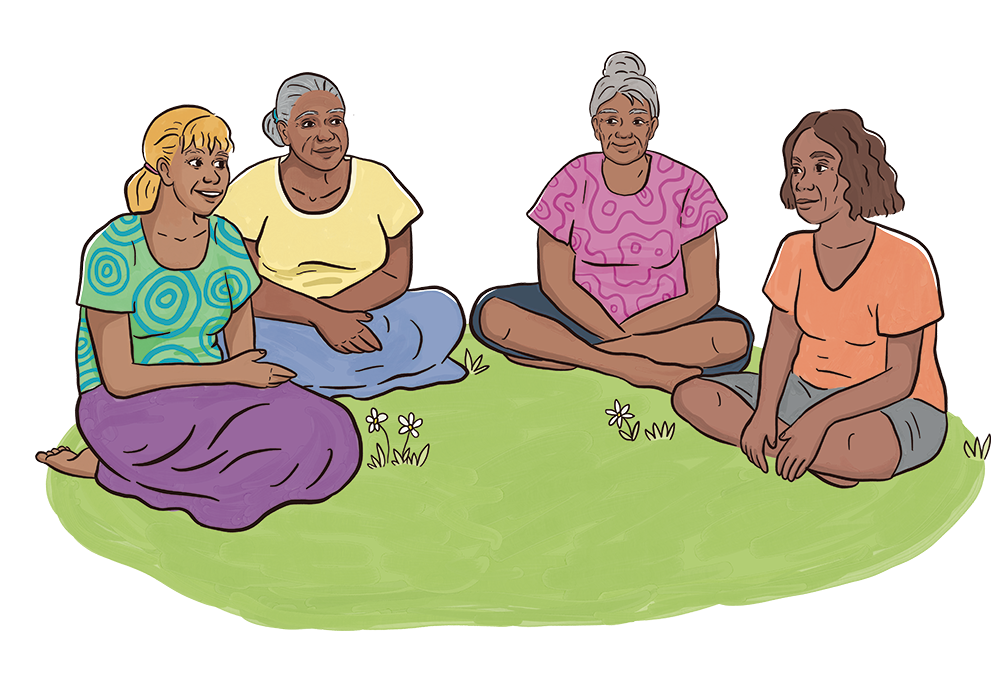
Each resource features artwork and illustrations by Alice Springs-based First Nations artists and designers, while rural, remote and urban First Nations communities helped inform the content.
A missing piece
The new menopause information is the latest in a suite of resources Jean Hailes has co-produced for First Nations communities. Five years ago, Jean Hailes joined forces with Alukura Women’s Health Service (part of Central Australian Aboriginal Congress) to develop targeted information on periods and polycystic ovary syndrome (PCOS).
Work done by Jean Hailes together with First Nations-led health services around Australia had exposed the gaps in culturally-appropriate menopause information.
"Working within the remote space, at times, there is not enough information about sensitive women’s health issues," explained Laura Hinds, a remote area nurse and midwife with the Miwatj Health Aboriginal Corporation.
We talk about puberty and conception and what it is like to have a period, or what it’s like to have a baby, but resources that support women later in life are very few and far between.
The new menopause resources are “culturally safe and evaluated by women of community”, Ms Hinds said.
“Having resources that are both in online format and hard copy has also been a big win. Sometimes our teams are not able to travel out to communities with a lot of luggage, so having the online versions has been very useful.”
Jean Hailes resources previously developed for First Nations communities have also been well received, with one community member describing illustrations in the PCOS suite as “relatable”.
“That’s family,” they said in an independent evaluation undertaken by Dr Emily Gilbert from Charles Darwin University. “Grandma sitting in the chair, her knees are going. So, I think it is well done. And I think it’s acceptable.”
The full suite of Jean Hailes resources for First Nations communities includes booklets, educational toolkits, animations and translated resources.
For free access to the material, head to the Jean Hailes website.
Artwork: Coolamon Creative. ©2024 Jean Hailes Foundation and reproduced by permission. All rights reserved.
Last reviewed: October 2024