
Partner in focus: Louise Gray, CEO, NOFASD Australia
Published: 11 September 2024
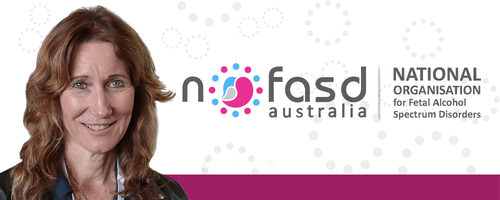
We spoke with Louise Gray, CEO of NOFASD Australia (National Organisation for Fetal Alcohol Spectrum Disorder), who explains the organisation’s vision and recent innovations.
What is the vision of NOFASD Australia?
NOFASD’s vision is to prevent alcohol-exposed pregnancies and improve the quality of life for people impacted by FASD (Fetal Alcohol Spectrum Disorder) across the nation. Practically, this translates to being an information broker or ‘one-stop shop’ via a free, confidential helpline service across multiple platforms of connection and engagement.
What are some of the challenges you face?
FASD is a common and complex disability which is often hidden. Challenges revolve around increasing knowledge and recognition of symptoms and ensuring patients receive referral for diagnosis and increased understanding of their disability. The pathway to diagnosis, treatments and supports can be unnecessarily lengthy. The challenge is to increase knowledge and streamline processes across multiple layers of service provision so that people of every age receive timely and accurate services.
Another major challenge is the role of alcohol and its use in Australia. Alcohol consumption is deeply embedded in the Australian lifestyle which allows complacency. Consumer awareness of alcohol as a toxin is an important health message for all Australians.
For those who are pregnant, planning a pregnancy or who could possibly be pregnant, preventing alcohol exposure is even more critical. We know that many pregnancies are unplanned or unintended and it is imperative there is wider awareness of FASD and that it is better understood.
We work with partners to raise awareness of alcohol harm in pregnancy because of the prevalence of FASD, and in recent years the Department of Health, Disability and Ageing has invested in promoting clear health messages about alcohol and pregnancy.
Finally, and very importantly, FASD is a lifespan disability and there is a dose-response relationship — meaning the more alcohol consumed, the worse the effect. Therefore, it is imperative that alcohol use disorders are prevented, or recognised and supported by informed health professionals with non-judgemental approaches.
Can you explain one of your organisation's recent innovations?
One innovation which springs to mind is our online support groups for families. In the 25 years of NOFASD’s history, there has always been a desire to bring people together to benefit from peer support by engaging and learning. There were many barriers to doing this in face to face, ‘real life’ settings. The advent of COVID coincided with our pilot project, providing an evidence-based support program on a Zoom platform facilitated by trained and experienced experts with lived and living-experience. The results were phenomenal because participants were so appreciative of the opportunity, learning and connections they made.
We knew that participants preferred the online real-time setting for practical purposes — no need for babysitters, or to even leave the house — but what we didn’t expect was that participants found it less confronting to start off by connecting in a Zoom environment. For many, it is easier to walk into a ‘Zoom room’ filled with strangers than to walk into a real-life setting. Many participants later connected offline and in person if geographic proximity allowed.
This learning also strengthened the structure and function of our lived-experience expert advisory group who now meet regularly and confidently engage with individuals and organisations to provide advice and insight into the disability.
Another one of the many new and innovative activities that support FASD is the Red Shoes Rock annual awareness raising event. The red shoes symbol evolved in North America as a conversation starter in 1999 with the tag line “Ask me about my red shoes”. From humble beginnings, when small events were held on the 9th day of the 9th month to raise awareness, the movement is now well-established in Australia.
Recent collaborations with other partners have resulted in a whole month of FASD awareness activities across Australia. Every September, bridges and other monuments are lit up red, free learning activities are offered, focus events are held, including pet photo competitions, mocktail creation and many more.
What about the partnership with Healthdirect is most valuable to you?
I think I am speaking from the consumer perspective when I say that the value of the partnership can be explained in one powerful word — trust. All truth risks being compromised on the internet and health information is one of the areas which is most at risk of digital misinformation. Accessible online information is a powerful tool for increased health literacy but with this comes a responsibility to ensure that information is easily accessible, evidence-based and therefore able to be understood. To me, the role of Healthdirect Australia goes far beyond the benefit to NOFASD; it is an important and reliable source of information for all Australians.
Last reviewed: October 2024