
Healthdirect Symptom Checker AI and UX enhancements help Australians get the right care
Published: 6 December 2024
New enhancements to the healthdirect Symptom Checker make it easier for consumers to access the existing and new healthcare services that are most appropriate for their needs.
Consumers use the online tool to anonymously enter their health information, symptoms and risk factors and are recommended the healthcare that is right for them. The Symptom Checker has been helping Australians find health information and advice for more than 10 years and is used nearly 2 million times each year.
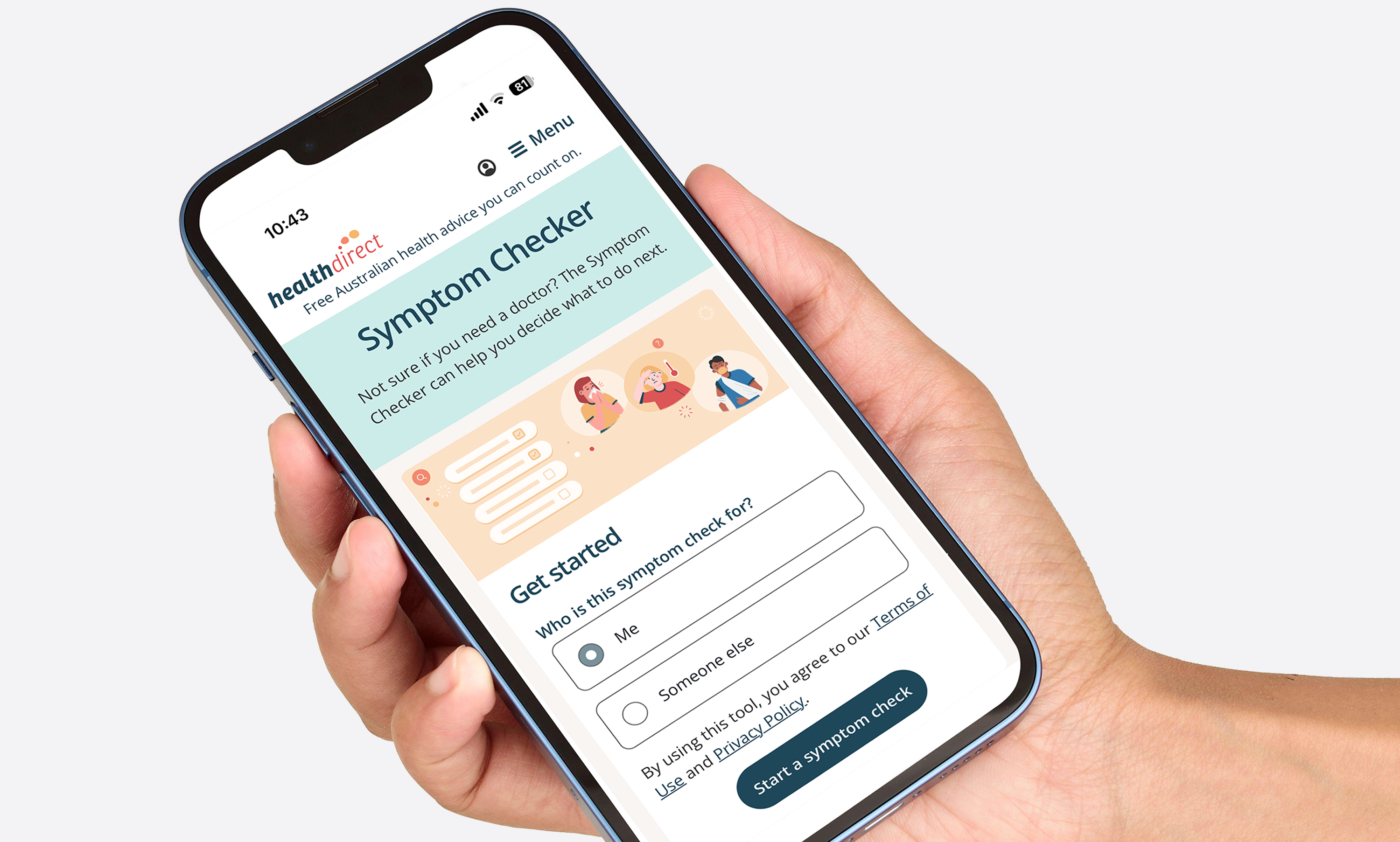
The healthdirect Symptom Checker, powered by proven artificial intelligence (AI) technology, has been enhanced to make it easier for consumers to access the most appropriate health services.
The clinical decision support system behind the tool was upgraded in in December 2023, and the upgrade improved the Symptom Checker’s ability to take into account multiple symptoms, risk factors and lifestyle considerations. This allowed it to provide more accurate triage and connections to the most appropriate service.
Healthdirect spent 12 months customising the AI-driven clinical decision support system for Australia and another 12 months using it on the healthdirect helpline, with a registered nurse validating the result every time it was used. Additional quality assurance was provided by healthdirect clinical governance teams.
Healthdirect’s AI Transparency Statement provides more information on how AI is used and monitored by the business.
A suite of updates improves matching users to the most appropriate care
Healthdirect Australia Chief Operating Officer, Travis Hodgson, says, “Recent updates to the online healthdirect Symptom Checker enable users to input multiple symptoms and risk factors including medical history and travel history. Additional details about symptom occurrence and severity improve the engine's precision in assessing clinical risk, triaging and recommending the appropriate care.”
Triage outcomes from the Symptom Checker have been mapped to the scopes of practice for pharmacies, GPs, urgent care clinics, and virtual and physical EDs to provide the most clinically appropriate care recommendation.
This is overlaid with an innovative system developed by Healthdirect Australia that uses the eligibility criteria of the available care pathways local to the patient to determine what care options are appropriate to their particular circumstances, and recommending the care which makes most effective use of the health system.
For example, the Symptom Checker recommends going to an urgent care clinic where there is one available and the patient's healthcare needs are within the clinic's scope of practice, rather than going to an emergency department.
This additional layer of sophistication means the Symptom Checker not only recommends care pathways that are available and clinically appropriate but also assists to optimise use of the country's healthcare resources. Users are then seamlessly linked to the healthdirect Service Finder, the consumer interface with the National Health Services Directory, a core piece of digital health infrastructure. They can then find their preferred clinic or practice, see real-time appointment availability, and make an online appointment booking where the practice supports that functionality.
These technical and clinical enhancements, along with improvements to the user experience, have resulted in a 35 per cent increase in Symptom Checker completion rates, from 49 per cent to 84 per cent.
Opening the door to more care options
“Consumers are now using the Symptom Checker twice as much as our helpline to get advice and connection to care,” says Mr Hodgson. “This shows they are willing to use digital options in health when they are well designed.
“We see significant use by specific demographic groups for certain symptoms,” Mr Hodgson adds. “These include women aged 20-39 seeking help for abdominal and back pain; men aged between 25 and 35 enquiring about mental health symptoms; and younger people looking for advice on sexual health. Having this information helps us plan our services.”
The Symptom Checker can also potentially take pressure off areas of high demand, such as hospital emergency departments, by offering urgent care as an option in communities where the service is available.
Symptom Checker also opens up choices that consumers may not have even known were available — for example, urgent care clinics that have opened in their area, local GP services or pharmacy services and, in some states, seamless connection to virtual emergency departments where appropriate."
As state-based virtual emergency departments are added to the healthdirect Symptom Checker, the tool will provide a seamless gateway to more care options that operate in the after-hours period, when many primary care services are unavailable.
Symptom Checker usage since July 2024:
- 72% of users are female
- Age group with highest use: 20–29-year-olds
- Most common symptoms: Fatigue, headache, nausea, sore throat, cough, tiredness, runny nose, diarrhoea, abdominal pain, fever
- Most common recommendation: See a GP (48.5%)
- Percentage of users who return: 41%
- Time of highest use: 9pm
Last reviewed: December 2024