
Information Partner Newsletter Winter 2026
Welcome to our Winter 2026 edition of the Information Partner Newsletter.
In this edition, we share how we’re adapting to support consumers accessing our health information and a snapshot of our enhancements to the National Health Services Directory and Service Finder. We also hear from our Partner in Focus, Jeff Antcliff, CEO Wounds Australia, who discusses how the Be Wound Aware campaign teaches Australians how to protect against chronic wounds. We also hear from Information Partner organisations Healthy Male, Pathology Tests Explained and Orygen.
Welcome to our new Information Partner
On this page:
- National Health Service Directory: Connecting the community to care
- As Australians are using AI for their health, we’re making it safer
- Healthy Male’s Just the Tips campaign makes sensitive health questions easier to ask
- PIA: a new AI assistant helping people understand their test results
-
Orygen secures Wellcome funding for safe, AI-powered youth mental health care
National Health Service Directory: Connecting the community to care
The National Health Services Directory (NHSD) is an important part of Australia’s digital health system. It supports national health plans and helps both the public and health professionals find care. It is a trusted source of information that consumers, providers and governments can rely on.
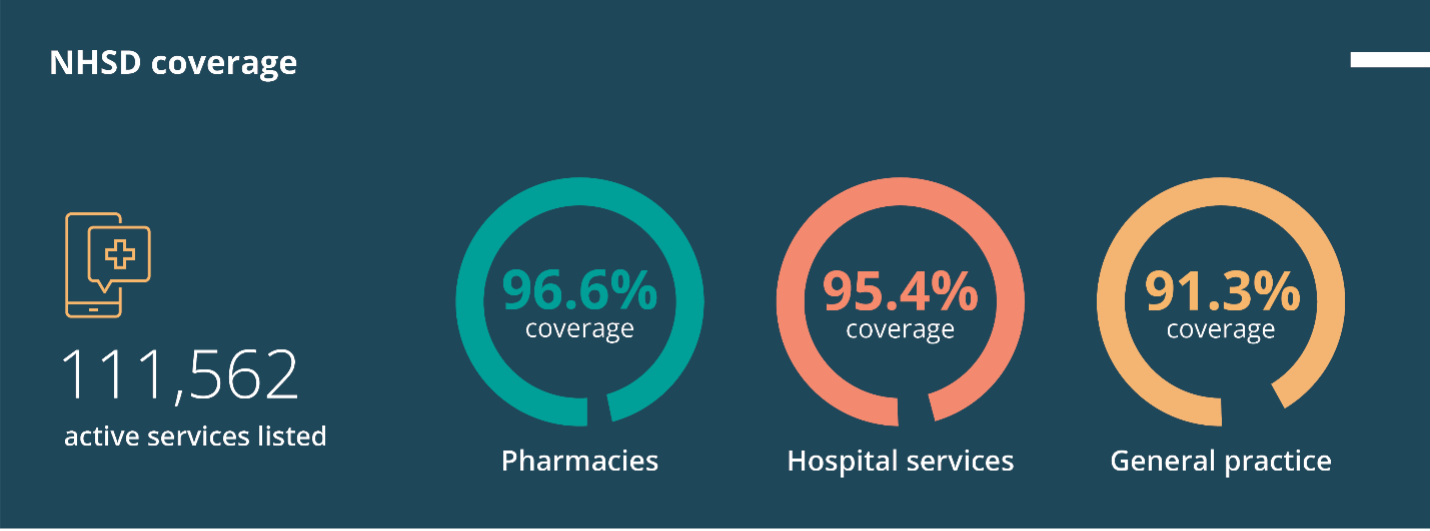
The NHSD supports governments to implement reform and health policies, referrals between provider, health helplines to find available services for callers and for consumers to self-source service options via the Service Finder which is the public face of the NHSD.
Service Finder
Service Finder provides consumers a simple, free way to search for, and connect with, health services in their area. Whether they are looking for a GP accepting new patients, a late-night pharmacy, or an allied health provider close to home, Service Finder brings together nationally consistent, up-to-date information in one place. This helps people compare options, make decisions, and access care more easily, without having to search multiple websites or contact providers individually.
Continuous data management
Maintaining the currency and accuracy of the NHSD is critical for enabling referrals and consumers to find services available to them.
If you work with health services, , please share this article and link with relevant practices and clinics so they can update their details or register their service: Information for service providers.
Supporting national reform
We work closely with the Commonwealth to support national reform.
From November 2025, the Commonwealth’s Bulk Billing Practice Incentive Payment program required participating practices had to list their bulk-billing services in the NHSD, making them visible in Service Finder and the Australian Government’s real-time bulk-billing map.
We worked with the Department of Veterans’ Affairs to increase visibility of services that accept Veteran cards. This included the addition of a Service Finder filter to allow for a customised search for these specific services. Launching in June 2026, this supported the Commonwealth’s response to the Royal Commission into Defence and Veteran Suicide, which highlighted the challenges veterans can face when seeking care during transition or crisis. By making this information visible before booking or attending an appointment, the filter helps veterans find appropriate services with greater confidence and certainty.
NHSD also supports state reforms that improve access to care
In NSW, we helped to implement attention deficit hyperactivity disorder (ADHD) prescriber rule changes by enabling Healthdirect helpline nurses and consumers to find clinicians who provide ADHD continuation scripts. An NHSD widget on the NSW Health website also helps consumers find local GPs offering this service. This is also a filter on the Service Finder, enabling users to easily find ADHD continuation prescribing practitioners.
The Directory also supported NSW Health’s expanded pharmacy program by making it easier for consumers to find participating pharmacies. This helps people access suitable care in the community and reduces avoidable emergency department visits.
As Australians are using AI for their health, we’re making it safer
Australians are increasingly turning to AI tools to get answers to health questions, with ChatGPT used by around half of Australia's adult population*. In many cases, they receive those answers directly inside the AI tool, without clicking through to a website at all.
Healthdirect content is now being regularly used by these AI tools to generate health answers, with nearly 9 in 10 citations from AI drawing on Healthdirect's core information for conditions and symptoms content (Healthdirect quarterly report January to March 2026).
Australians are reaching for AI because it's instant, it's personal, and it speaks their language. Our job isn't to talk them out of that, but to make it as safe and reliable as possibleBettina McMahon, Chief Executive Officer, Healthdirect Australia
A trusted source for health information
Healthdirect hosts evidence-based health information, which is maintained and adheres to Australian health guidelines. The content is written according to health literacy principles in plain language, with page reader functionality and an increasing number of easy-read information.
Over the past 12-18 months, Healthdirect has adapted to how consumers are seeking health information. We have responded early to consumer needs by restructuring our content for AI use, increasing our visibility in AI platforms, and working with large language model operators to preserve clinical context and safety prompts. Consumers can still click through to the underlying sources for more information.

AI tools are using Healthdirect to answer clinical questions
AI platforms are not just mentioning Healthdirect, they are actively using our content to answer health questions. Healthdirect's Australian AI visibility score is 71, up from 66 in October 2025, showing that AI systems are treating Healthdirect as a clinical knowledge source.
In many cases, AI tools now link directly back to Healthdirect pages when generating answers. Our visibility has continued to improve over time, particularly within Google's AI-generated health responses. Healthdirect Australia's overall AI visibility score is 71, which places us in the dominant tier of sources that Google's AI treats as top-tier authorities. This shows growing confidence in our content as a reliable, evidence-based reference that can be easily consumed by AI agents.
Meeting consumers where they are as AI changes how people find trusted health information
Healthdirect has adopted AI in how we deliver services to consumers. Our Virtual AI Assistant delivered a proof-of-concept tool to identify preventive health opportunities and guide consumers to best actions.
As the next step in this journey, we are working with OpenAI to develop a native app to support consumers seeking health advice through guided triage, with additional information about medicines, understanding what health service they may need and an option to move off the digital experience and speak with a nurse.
This is bringing Healthdirect's trusted role into the AI environments which Australians already use by providing a safer, evidence-based alternative to unverified AI health responses.
You can learn more about how we use AI here: Artificial Intelligence Transparency Statement
*Healthdirect cited research commissioned by OpenAI in December 2025.
Partner in focus: Jeff Antcliff, CEO Wounds Australia

What is the vision of Wounds Australia?
It’s our mission to minimise the harm caused by chronic wounds, which affect more than 450,000 Australians every year.
A chronic wound is a break in the skin that takes longer than 30 days to heal or keeps reoccurring. They can be painful, embarrassing, isolating and expensive. Research shows that many chronic wounds could be healed quicker or prevented entirely with timely and appropriate diagnosis and treatment.
Our vision is that all Australians are empowered to help themselves by understanding the basic concepts of how to prevent an acute wound like a cut or graze from worsening, the warning signs of a chronic wound, and when and where to seek professional help.
What are some of the challenges you face?
A big challenge is some persistent and damaging myths held by the public. We undertook Australian-first research in 2025 into what consumers think and know about chronic wounds and the findings were disturbing: 50% of respondents would not identify a reoccurring wound as chronic, most people use search engines as their primary source of health advice, and far too many people are clinging to misconceptions about the healing power of seawater and pet saliva!Jeff Antcliff, CEO Wounds Australia.
Additionally, we discovered that most respondents did not understand the personal risk factors, such as diabetes or ageing, that give them greater chance of developing a hard-to-heal wound.
The Be Wound Aware campaign is designed to teach Australians how to protect against chronic wounds. It is a three-year education campaign funded by the Department of Health, Disability and Ageing under the Chronic Wound Consumables Scheme. The website woundaware.org has a library of accessible, evidence-based resources designed for consumers with dedicated materials for First Nations and culturally and linguistically diverse communities, including factsheets, videos, newsletters and more. Plus, we will be launching a four-part training series teaching the basics of great wound care during our national annual Wound Awareness Week (28 September - 4 October).
Be Wound Aware campaign materials are created with panels of consumers and clinicians to ensure they are relevant, appropriate and easy to understand, and they are delivered in many ways: in GP surgeries, shopping centres, on TV and radio, in social media and online. Through this campaign, we are empowering everyday Australians to help themselves and reducing unnecessary suffering.
Tell us about one of your organisation's recent innovations
Another challenge lies in self-identification; people tend to think of themselves as living with diabetes or lymphoedema or spinal cord injury – or with any number of comorbidities associated with higher chronic wound risk – than as ‘a chronic wound sufferer’. This makes getting people’s attention harder and affects how, where and when they seek treatment.
In February 2026, we launched a new national annual initiative, Beat the Swell Day, which underscored the strong connection between lymphoedema and chronic wounds. Too many people believe leg, ankle and foot swelling is a normal part of ageing; the Beat the Swell campaign says: Get it checked! The initiative combined clinician education with consumer awareness, an incredibly successful format we plan to replicate in 2027 for skin tears, a prevalent wound type affecting millions around the globe. We will be announcing more about national Repair the Tear Day on 31 March 2027 very soon.
What do you value most about your partnership with Healthdirect Australia?
The Be Wound Aware consumer campaign marked a significant departure for us as we began to speak to a new audience – consumers – with little awareness of our work. Being an official Healthdirect Information Partner confers instant credibility. It tells new visitors to our site that they can trust our work – a vital factor in today’s increasingly fragmented online world.
As the only national peak body in chronic wounds, Wounds Australia advocates for patients and professionals, drives research, provides best practice education and represents the sector internationally. While we have always enjoyed a strong reputation with the medical community, industry and government, consumers are an exciting new challenge for us.
Healthy Male’s Just the Tips campaign makes sensitive health questions easier to ask
Just The Tips is a humour-led campaign from Healthy Male, created to give Australian men aged 18-45 clear, credible and judgement-free answers to the sexual health questions they’re already searching for online.
The campaign launched in late April and ran throughout May 2026. It was designed to reduce stigma, counter misinformation and help men feel more confident about what’s normal, what’s not and when to seek help.
At the centre of the campaign was the Just the Tips sexual health video series, which uses familiar food and cooking metaphors, plain language and clinical accuracy to make awkward or taboo health topics easier to talk about. Topics included penis health, testicular health, wet dreams, testosterone, pelvic floor health and other common sexual and reproductive health questions.
All campaign content has undergone a rigorous clinical review process to make sure it was accurate, evidence-based and appropriate for the audience.

Just The Tips campaign used playful images to make it easy for men to talk about awkward health topics.
Why it was created
Lots of men have questions about their sexual and reproductive health but don’t always know who to ask. Some feel embarrassed raising these topics with a GP, while others are unsure whether what they’re experiencing is serious enough to book an appointment.
We also know many men turn to search engines, social media or online forums first, often when they’re feeling anxious or unsure. The information they find online can be inconsistent, overly clinical, hard to interpret or not really written with men in mind.
Just The Tips was created to give men a low-pressure way to get credible answers in the places they’re already looking for them.
Campaign goals
- Normalise common sexual health questions
- Reduce stigma and embarrassment around men’s sexual and reproductive health
- Counter misinformation with clear, practical and clinically reviewed information
- Help men understand what’s normal, what’s not and when to act
- Encourage earlier, informed help-seeking
- Position Healthy Male as a trusted source of sexual health information for Australian men
How it worked
The campaign was delivered through a digital-first mix of short-form social content, search-optimised video and search engine optimised-led website content. This included:
- Short-form video cut-downs across Facebook, Instagram, TikTok and YouTube Shorts
- Longer, search-optimised video on YouTube
- Content embedded across relevant Healthy Male website pages
- Emails and newsletters to promote to existing audiences
- Paid advertising across Facebook, Instagram, YouTube and TikTok
- Community engagement through comments, polls and a Reddit Ask Me Anything (AMA)
- Targeted partnerships with content creators
The campaign used humour, surprise and plain language to make sensitive health topics feel easier to engage with, while keeping the information clinically accurate and credible.
Early outcomes and learnings
The campaign is still in early stages, so long-term behaviour change or health impact data is not yet known. However, early engagement was strong, with almost one million views during the campaign period.
Private shares and saves were among the strongest engagement signals, while public comments were more limited. This was expected given the sensitive nature of the topics and suggests people may be engaging with, saving or sharing the content privately rather than publicly commenting on it.
One of the strongest-performing topics used a playful euphemism — “How do you clean your zucchini?” — to talk about penis hygiene in a way that felt approachable without undermining the credibility of the information.
Early learnings
- Specific questions perform better than broad awareness messages
- Men are willing to engage with awkward or taboo health topics when they’re handled directly, with humour and without judgement
- Short-form video is a useful format for sensitive health information
- Credible health content doesn’t need to sound formal to be trusted
- Humour can help reduce stigma when it’s backed by clinical accuracy
PIA: a new AI assistant helping people understand their test results
In January 2026, Pathology Tests Explained (PTEx) launched the Pathology Information Assistant (PIA) to help consumers understand their pathology results.
The new AI tool supports Australians to view their test results through My Health Record (MHR) or the 1800MEDICARE app, via a direct link to PTEx.
The PTEx website is operated by a not-for-profit consortium of leading pathology professional bodies and providers. More than 750,000 users have followed the link from MHR in the past year, contributing to 1.6 million visits to the website.
PTEx is an important resource, providing plain language explanations of a comprehensive library of pathology tests, screens and related conditions. All information is reviewed by practising pathologists and scientists and can be trusted as being accurate and authoritative.
Landing on the home page and having to search the site using unfamiliar terms can be daunting. ThePTEx team have developed PIA, an AI tool with the ability to understand natural language which makes interacting with the website feel like a conversation.
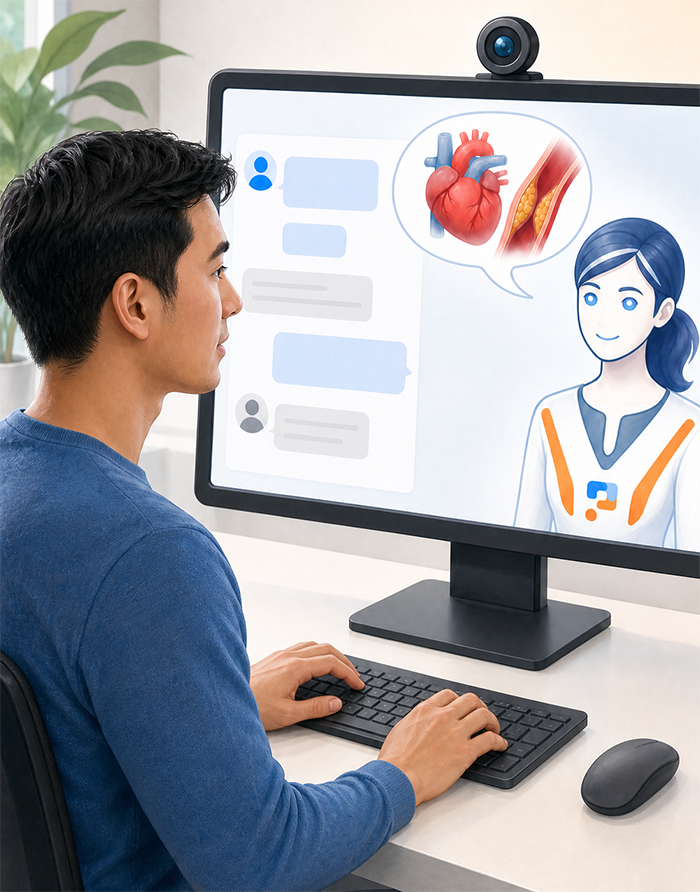
The Pathology Information Assistant (PIA) helps consumers to easily understand their pathology results.
Applying guardrails
PTEx manager, Dr Kevin Carpenter said pathology tests can be complex, and it is important that people had support when receiving their results. “There’s a huge amount of information on pathology testing on the internet, not all of it is relevant to the Australian context or from trusted sources,” he said.
Asking PIA a question is different from asking Claude or ChatGPT. PIA is instructed to only source information from within the PTEx website. This ensures accuracy, and also ensures that PIA responses include information about the tests requested but do not extend to interpretation or diagnosis. Users are always directed to consult a healthcare professional. People are also instructed not to provide personal details.Dr Kevin Carpenter PTEx Manager
Continuous refinement
All questions and answers generated by PIA are reviewed by the PTEx editorial team. The model, (based on Google Gemini), has been trained to ensure responses are informative and personalised, however, PIA stresses that the information provided is not a substitute for professional medical advice, diagnosis, or treatment.
Evaluation
Evaluation of PIA performance forms part of a study conducted by the University of Wollongong examining AI health literacy. Users of PIA can interact in their native language, and the study includes assessment of PIA’s accuracy, safety and acceptability across Australia’s six most commonly spoken languages.
The Pathology Information Assistant is available at ptex.au/pia.
The next generation of personalised and collaborative mental health care for young people has been given a major boost, with the announcement of $5.7 million in funding from Wellcome for an Orygen Digital supported project to make AI-enhanced youth mental health care a reality.
The funding will enable the AI4You(th) project to develop and evaluate a new AI system called SensAI designed to support both young people and clinicians with more personalised and collaborative mental healthcare. The project will be led by Dr Isabelle Scott from Orygen and the University of Melbourne in close partnership with Orygen Digital researchers and engineers, with collaboration from an AI team at RMIT School of Computing Technologies.

Orygen will co-design the new SensAI tool with young people to ensure it is safe and effective for young people to access mental health care.
Safety for young people
This work will help build the AI capabilities needed to power the next generation of Orygen Digital’s services, including MOST, its flagship digital mental health platform, and future service models. The project will be co-designed with young people and grounded in real services, reflecting Orygen’s approach of combining research, innovation and clinical care.
The project comes at a critical time, as AI presents significant opportunities as well as legitimate concerns for young people, making it important to ensure these technologies are used safely and effectively in youth mental health care.
We often hear negative stories about AI and its impacts on the next generation, but at the same time young people are already using these technologies, and we're seeing enormous potential across healthcare and more broadly. With this project, we're focused on getting that balance right: improving AI so it can be genuinely safe and effective for young people.Dr Scott
Developing the tool
The project will develop and test new methods to improve generative AI itself, enhancing its capacity for personalisation, agency, transparency, safety and collaboration – qualities that young people have told us are essential if AI is to genuinely benefit them in mental health settings. These methods will be embodied in SensAI, an AI collaborator designed to support both young people and their clinicians, providing personalised, continuous support between clinical contacts.
The project will develop and test SensAI over a 2-year period, laying the groundwork to explore how safe, ethical and effective generative AI methods can be integrated into Orygen Digital's suite of sector-leading care innovations such as MOST.
Click here to learn more about Orygen Digital
About Wellcome: Wellcome supports science to solve the urgent health challenges facing everyone. They support discovery research into life, health and wellbeing, and they're taking on three worldwide health challenges: mental health, infectious disease and climate and health.
Have you got something you would like us to share?
We love to hear news from our Information Partners. Please contact us if you would like us to showcase a new service or innovative project in the next Information Partner Newsletter.
Your Partner Manager,